The U.S. Golf Manufacturers Anti-Counterfeiting Working Group is an organization dedicated to stopping the production, distribution and sale of counterfeit or "fake" golf equipment across the globe. Formed in 2004, the group is made of five of the most well-known golf manufacturers in the world –Callaway-Odyssey; TaylorMade-adidas Golf and Ashworth; PING; Cleveland Golf, Srixon and Never Compromise; and Acushnet Company whose brands are Titleist, FootJoy and Scotty Cameron. These manufacturers came together to protect the integrity of the game and to protect the consumers they've served for so many years.
The group works internationally with law enforcement and government agencies to identify and eliminate counterfeiting operations while simultaneously working to raise consumer awareness of the issue. This isn't a brand issue, it's an honesty issue, a quality issue, and in some cases, a safety issue. For the good of customers and the game, the group is committed to putting an end to these fakes.
For golfers, the issues with counterfeit clubs can range anywhere from a loss of distance and accuracy to a safety issue—with shafts that shatter and heads that fly off mid-swing. Some golfers look online and see what they think are top-of-the-line clubs at bottom barrel prices, so they buy them. But as the old adage goes, if it sounds too good to be true, it probably is.
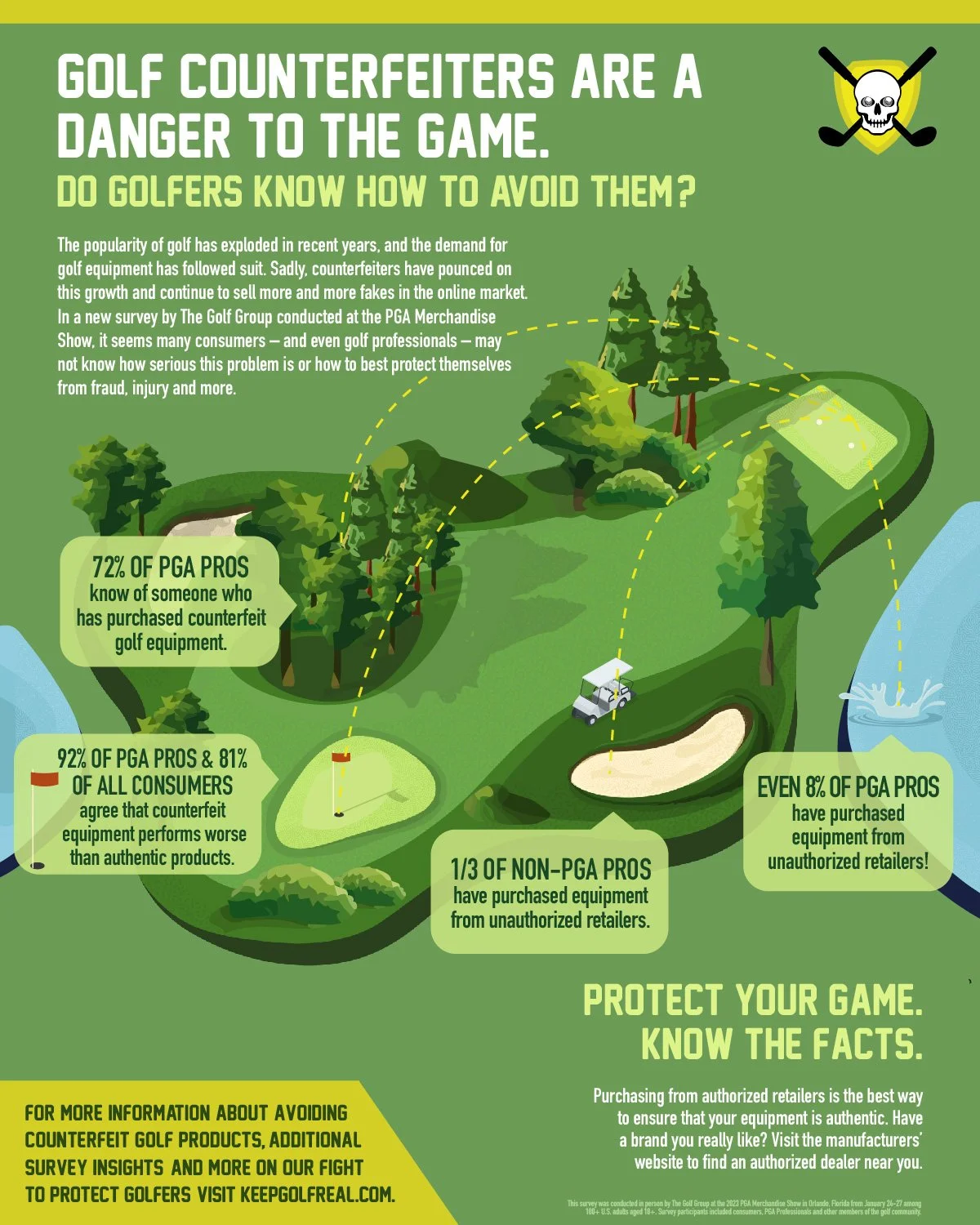
Although we would like to educate golfers on how to spot a fake, the truth is the most reliable way to be sure someone is purchasing an authentic product is to buy the product from an authorized source. There will always be a risk that a product purchased from an unauthorized source will be counterfeit. Counterfeit manufacturers are constantly changing and it's becoming more and more difficult to spot counterfeits…until you play golf with them.
Authentic clubs maximize a golfer's performance. To ensure the golf equipment you're purchasing, or have already purchased is authentic, ask yourself the following questions:
1. Am I purchasing my new golf equipment from an authorized dealer?
To ensure that you are purchasing authentic golf products, please buy from an authorized retailer/dealer. A list of authorized retailers can be found at each manufacturer's website, or by contacting the manufacturer's customer service department.
2. A number of websites offer discounted golf products and claim to be OEM's or approved vendors. Are they legit?
Probably not. There has been an increase in the number of websites that offer deeply discounted golf products. These sites are mainly based in China. If the site is not identified as an authorized retailer / vendor according to the manufacturer's website, it is likely selling counterfeit products.
3. There are slight differences in the appearance of the club, including different shades of color, or slightly different engravings. Did I purchase a fake?
Most likely. Most golf manufacturer's do not sell "blems" or "seconds", so there will not be different versions of golf equipment in the marketplace.
4. The golf club that I purchased off of a website was shipped from China. Should I be concerned?
Yes, if the product is shipped from China, chances are high that it is fake.
WHEN IN DOUBT, DON'T BUY! SAVE YOUR GAME!
It's estimated that as many as 2 million counterfeit golf clubs are produced each year. To put that number in perspective, if you laid every fake club end-to-end they would stretch from Bethpage Black to Pebble Beach and back again. That's more than 5000 miles. And that doesn't even take into account the millions of fake balls, bags, gloves, and apparel produced. It's a major problem.
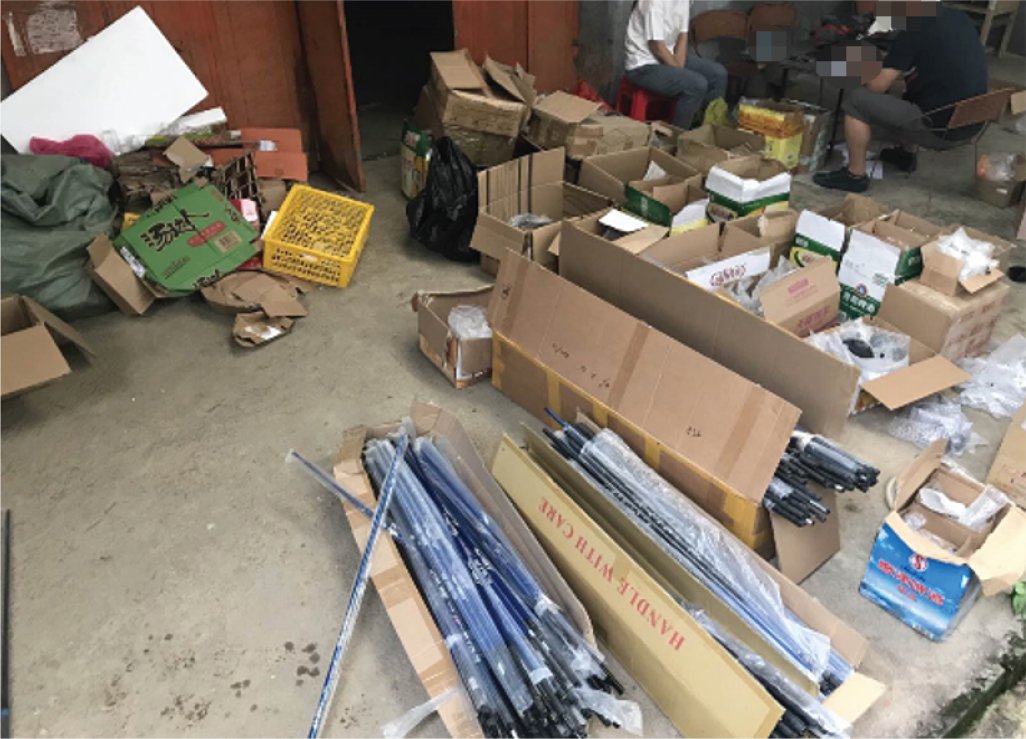
The growth of the Internet and rogue websites selling fakes has led to an increase in the sale of counterfeit golf products over the last decade. As a result, consumers purchasing golf equipment from unauthorized dealers are often times duped into spending their hard earned money on fake goods. The efforts of the group have led to raids and seizures of a substantial number of counterfeit clubs, but there is still considerable work left to be done.
October 3, 2011
Golf Anti-Counterfeiting Group's Efforts Lead to Significant Convictions & Raids
January 9, 2012
Golf Anti-Counterfeiting Group's Efforts Shut-Down 62 Alleged Counterfeit Websites
January 25, 2012
Record Number of Fake Golf Products Nabbed by Anti-Counterfeiting Group in 2011
April 11, 2012
Nearly 200 Websites Shut Down in Golf Anti-Counterfeiting Group's Latest Crackdown
What is the group doing to get rid of counterfeiting in golf?
It comes down to two things — education and enforcement. Since forming the anti-counterfeiting group we've worked with law enforcement officials around the world to conduct raids and to chase down those involved in this criminal activity.
Education may be even more important to our efforts because as long as people are willing to buy these fakes, counterfeiters will continue to make them. We are committed to educating golfers on the risks and pitfalls associated with these clubs. This website is just one part of our education efforts.
How are your efforts going?
In 2010, the group seized 25,000 counterfeit golf products with a value of more than $1 million. We continue to work with international agencies and law enforcement to combat the problem.
How can I be sure that I purchase authentic products?
The only way to be sure is to always buy your golf equipment from an authorized dealer.
I think I purchased fake clubs. What can I do?
Although it's up to you to decide what's in your best interest, here are several options you might consider:
1) dispute the charges with your credit card company
2) file a claim with PayPal (if you used their services)
3) report the incident to the Internet Crime Compliance Center at www.ic3.gov
Where are fake clubs made?
The vast majority (over 90%) of counterfeit golf products are made in China, but they can be made anywhere. The group has investigated and raided counterfeit manufacturers in China, Thailand and Vietnam, to name just a few locations.